
Not Messy. Clothesquatted
The spaces you didn't design that designed you anyway: Part 2

New to Open Enough Design? Read Start Here to discover how your room can make accidental connection the default.
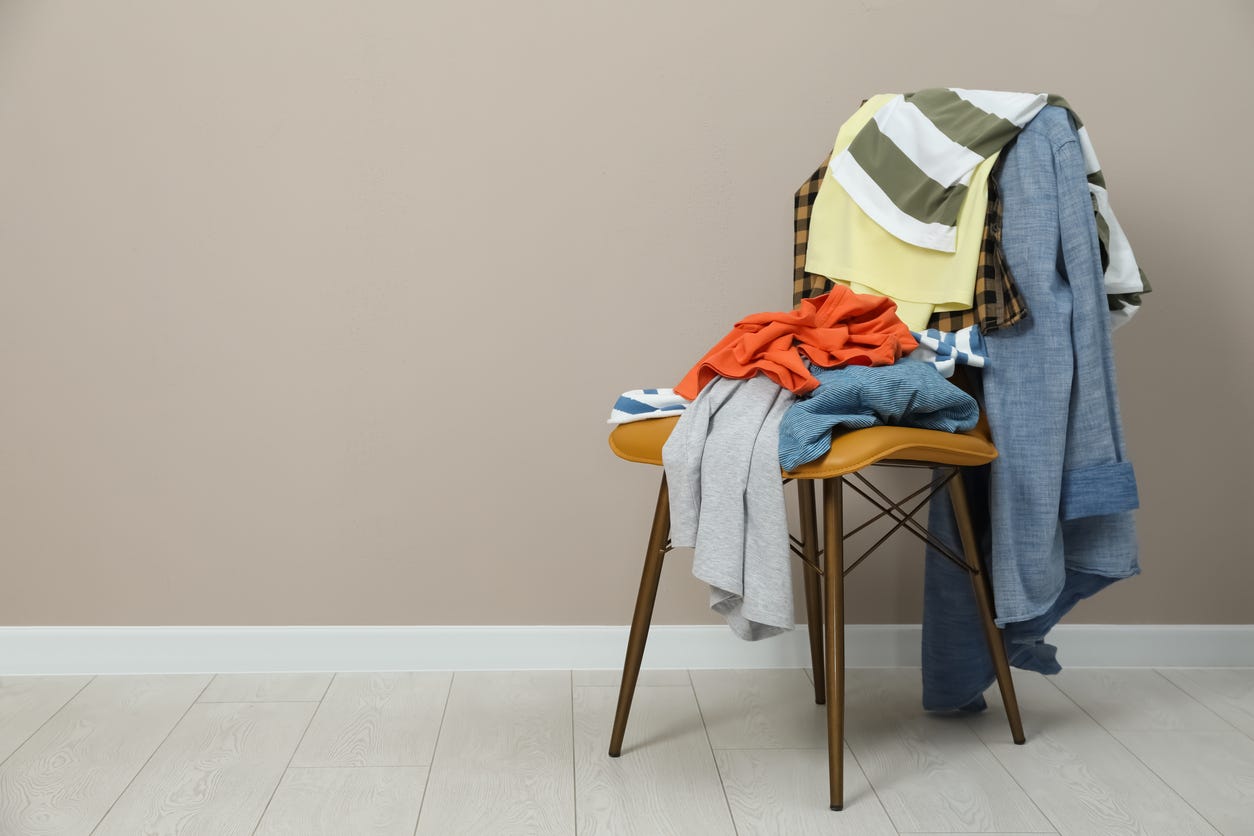
You know the chair.
It might be an actual chair. It might be a treadmill, a bench, that purple exercise ball you bought in 2019 and never use. Whatever it started as, it’s now something else: a vertical surface covered in clothes.
Not dirty clothes. Those go in the hamper. Not clean clothes. Those go in the closet. These are the in-between clothes. Worn once. Maybe twice. The jeans from Saturday. The sweater that isn’t dirty but can’t go back with the clean ones. The jacket you grabbed in case weather happened, then weather didn’t happen.
The chair has been clothesquatted.
Clothesquatting: when garments occupy furniture they have no legal claim to. The chair didn’t consent. The treadmill didn’t agree either. The exercise ball definitely wasn’t designed for it. But the clothes moved in anyway, and they’re not leaving.
Everyone has a clothesquatted surface. No one designed it. No one decided “I will create a loitering zone for garments.” It emerged. And it keeps emerging, no matter how many times you clear it.
The common reading: lazy. Disorganized. The inability to just put things away.
The OED reading: your nervous system solved a problem your closet couldn’t.
Stand in your bedroom doorway and look at the clothesquatted surface. What’s actually on it? Tomorrow’s outfit, or a version of it. The shirt you might wear if the weather holds. Layers for a day you haven’t lived yet.
Now think about the morning. The alarm. The grogginess. Twenty minutes before you need to leave. The closet is across the room, full of hangers, full of decisions. Clean or dirty? Fold or hang? Which drawer?
The chair requires zero decisions. Reach. Grab. Go.
This isn’t laziness. This is tomorrow anxiety. The nervous system, while you weren’t paying attention, built itself a staging area for re-entry into the world. It’s pre-loading decisions so 5 AM you doesn’t have to make them.
I do live assessments over Zoom: $30 for 15 minutes. No renovation. No redecorating. Just a trained eye on a room and a few suggestions to make it better for your nervous system and the people around you.
Email help@openenough.com to book a session.
But there’s another layer to clothesquatting. The purgatory problem.
A shirt you wore for two hours isn’t dirty. But it touched your body. It absorbed something. Putting it back with the pristine folded shirts feels wrong. Hanging it with the dry cleaning feels ridiculous. The hamper is for things that need washing, and this doesn’t. Not yet.
So it goes on the chair. The sweater from dinner. The dress pants from a meeting that ended early. The hoodie that’s basically clean but smells faintly of the restaurant you ate at. I have one of these right now. It’s been on my chair for four days.
None of these belong in the hamper. None belong in the closet. They belong in limbo. And limbo, apparently, is furniture you stopped sitting on.
Here’s what no closet system accounts for: the worn-once. The categorically ambiguous. The clothes that exist between states, but your nervous system MacGyvered an ad-hoc solution.
So what do you do?
You have two options. Bless it or eliminate it.
Bless it means stop pretending the behavior will stop. It won’t. The nervous system has identified a need and will meet that need whether you approve or not. So give it infrastructure. A valet hook on the wall. A dedicated rack in the corner. Clothesquatting was a deferment. The hook is a decision. When you bless the behavior, the guilt disappears. The squatters become tenants.
Eliminate it means making the closet easier than the chair. Open shelving instead of drawers. Hooks instead of hangers. A clear path from bed to clothes. If putting something away requires fewer decisions than draping it, the furniture empties itself. The chair only wins because the closet loses.
Look at the clothesquatted surface. Don’t clear it. Don’t feel bad about it. Just ask: what is this solving?
Then decide.
You didn’t design this space. Your nervous system did, while you were sleeping. And the room, as always, won.
I employ the sniff technique. Either into the hamper or back in the drawer or onto a hanger it goes. There’s already too many microplastics in the water, and energy spent heating water and drying clothes.