
Your Kitchen Might Be Training You to Snack
Most people blame willpower. OED blames the room.

New to Open Enough Design? Read Start Here to discover how your room can make accidental connection the default.
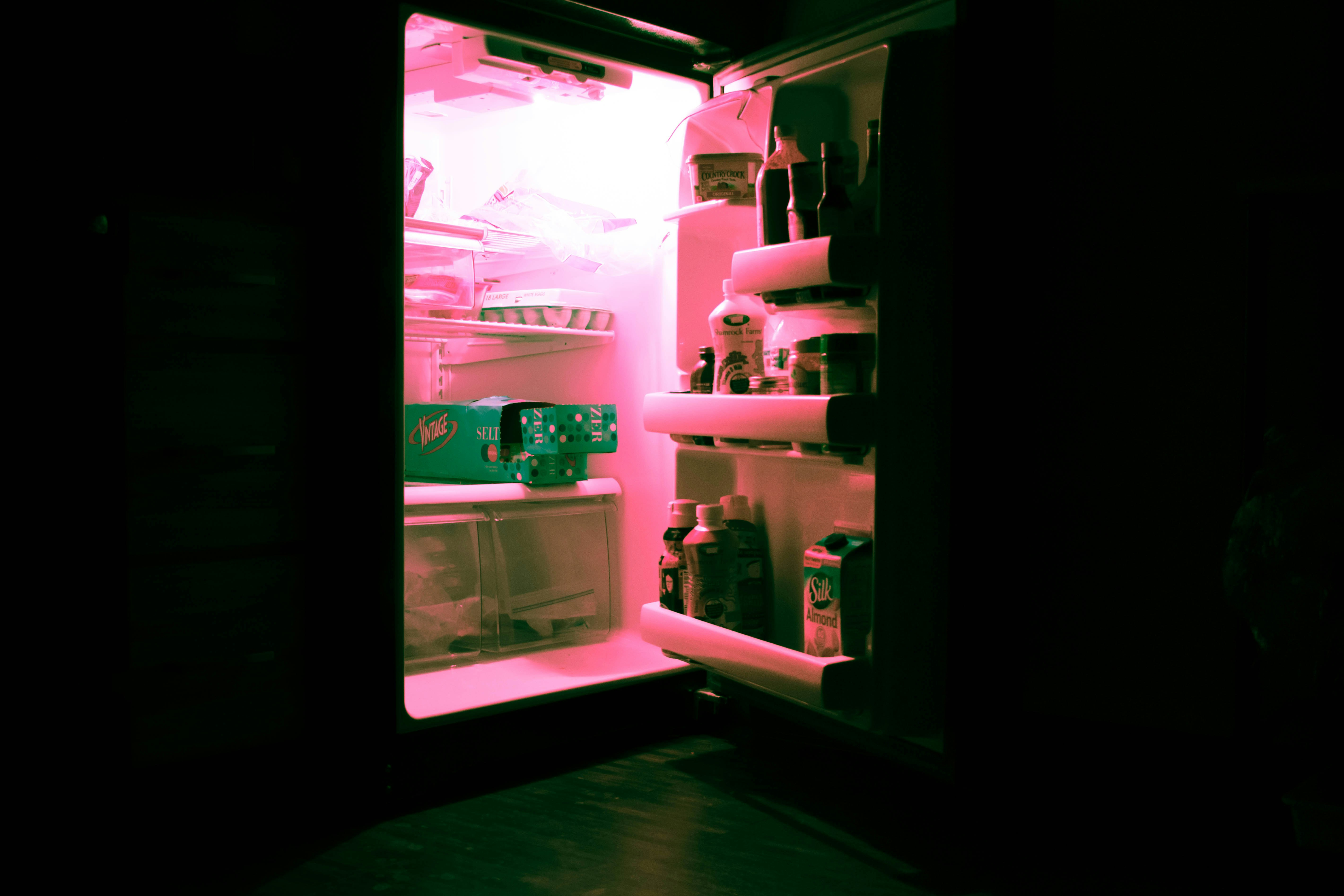
Walk into your kitchen late at night.
You’re not hungry enough for a real meal. At least that’s what I tell myself; maybe you do too.
So you open a cupboard. You grab a handful of those flax and multigrain crackers that were on sale. Or a granola bar. Or whatever is visible and easy. You eat standing up. Maybe over the sink. Maybe while looking at your phone. Ten minutes later you are still vaguely unsatisfied, so you go back for something else.
This is usually framed as a discipline problem. I think that is the wrong diagnosis.
Open Enough Design starts somewhere else. It asks a much better question: what if your kitchen is quietly training you to snack?
That sounds dramatic until you look at what most kitchens actually reward.
Kitchens reward speed. They reward standing. They reward solo eating. They reward whatever is visible and reachable. They reward the smallest possible food decision in the shortest possible time.
In other words, they reward grazing.
A lot of kitchens make a real meal feel like a production. You have to clear a surface. Find a pan. Face a wall. Work alone. Then either eat by yourself or carry the food somewhere else and keep fussing while everyone else starts. Compare that to the ease of grabbing something with one hand and being done in thirty seconds.
The room is not neutral here. The room is casting votes.
That’s the OED point.
People think they are making food decisions in a blank environment. Not so, frens. They are making food decisions inside a system of cues. Sightlines. Surfaces. Lighting. Seating. Reach. Friction. The kitchen is sending a constant message about what kind of eating belongs there.
Some kitchens say: sit and stay. A shocking number say: grab and go.
And the steady signal usually beats the noble intention.
This is not about turning an apple into a moral controversy. Some snacking is fine. The point is deeper than that.
This article is derived from Set Another Place, the Open Enough Design book on how kitchens shape what you eat, how you feel, and whether anyone joins you.
Available now on Amazon (paperback, kindle) and Tentary (PDF and epub).
This is why I am less interested in telling people to resist snacks and more interested in asking why the meal has become so hard to access. If the table is buried. If there is no pleasant place to sit. If the cook is isolated. If the most visible foods are the most snackable. If the room has no sense of occasion. Snacking is not a character flaw. It is a design outcome.
A meal does two jobs. It feeds the body and it creates a moment. It slows the pace. It gives your attention somewhere to land. It gives another person a chance to join you. And that is not a small thing. A shared meal puts food in the center of the table the way a puzzle sits on a coffee table. It gives two people something to look at besides each other. It lets conversation happen sideways, over the passing of a dish, without the pressure of face-to-face demand. The meal is the original reason people sat down in the same room at the same time. Even if nobody else is there, a meal still changes your relationship to food. You sit. You taste. You register that eating is happening.
A snack rarely does any of that. It slips past the senses. It is efficient. It is forgettable. It almost never satisfies the part of you that wanted more than calories.
So here is the diagnostic.
Does your kitchen make eating feel like a pause, or like pit stop refueling? That question matters more than people think. Then ask two more: Can I sit down and eat in this room without moving a pile of stuff first? Is there anything in this kitchen inviting me toward a meal, not just toward food?
If you are not sure, here is another way to say it. A lot of modern kitchens are basically private vending machines with countertops.
The good news is that you do not need a renovation to change the training.
Clear the table. Set one place. Put fruit where the chips sit in plain view. Visible food is not decoration. It is a decision your kitchen already made for you before you were hungry. Create a perch where someone can linger while you cook. Turn one light on that makes the room feel warm enough to stay in.
Those are small moves. But small moves change the message. And when the message changes, behavior starts to follow.
That is the wager behind OED.
Don’t begin with willpower. Begin with the room.
Because the kitchen is always teaching. The only question is what lesson it is giving.